Understanding PSI and Flow Rate Before You Hire a Cleaner
If you are comparing pressure cleaning quotes around Lake Macquarie, you will probably see two technical terms: PSI and flow rate. Many homeowners focus only on PSI, assuming a higher number means a better clean. In practice, the way pressure and water volume work together determines how effective, and how safe, a clean will be for your property. Understanding both measurements helps you ask better questions, compare quotes fairly, and avoid damage to your home.
What Is PSI?
PSI stands for pounds per square inch, and it measures the force of the water leaving the machine. Australian suppliers also commonly list pressure in bar or MPa. As a rough guide, 1 bar is about 14.5 PSI, so a machine rated at 200 bar delivers roughly 2,900 PSI.
PSI describes how hard the water hits a surface. High pressure can lift stubborn grime, oil stains, and flaking paint, but too much pressure on the wrong surface can etch concrete, gouge timber, strip paint, force water behind cladding, and damage roof tiles or mortar.
What Is Flow Rate?
Flow rate measures the volume of water the machine delivers, usually in litres per minute (L/min) in Australia, or gallons per minute (GPM) on US-made equipment. One GPM is about 3.8 L/min.
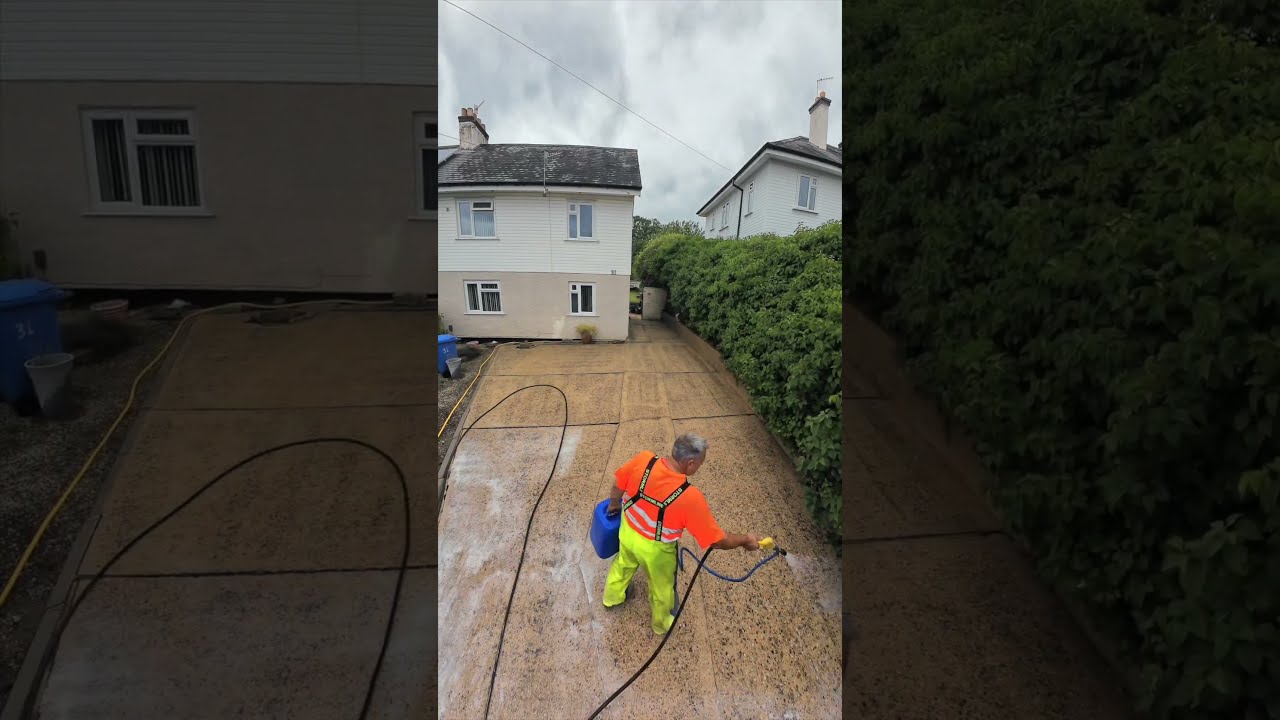
If PSI is the force that loosens dirt, flow rate is what carries it away. A machine with high flow can rinse a large area quickly and flush away debris, mould, and cleaning solution. A machine with low flow may have plenty of pressure but will clean slowly and leave residue behind.
Why Both Numbers Matter Together
Cleaning power is a combination of pressure and flow. Professionals often refer to this as cleaning units, calculated by multiplying PSI by GPM. A 3,000 PSI machine at 2 GPM produces 6,000 cleaning units, while a 2,000 PSI machine at 4 GPM produces 8,000. The lower-pressure machine can actually clean faster because it moves more water across the surface.
This is why a cleaner who relies on extreme pressure alone is not necessarily better. Skilled operators often use moderate pressure with high flow, combined with the right detergents, to get results without harming the surface.
Typical PSI Ranges for Common Surfaces
The right setting depends on the material. The ranges below are general guides only, and a professional will adjust based on the condition and age of each surface.
- Concrete driveways and paths: roughly 2,500 to 3,500 PSI, often with a surface cleaner attachment for even results.
- Pavers and exposed aggregate: around 1,500 to 2,500 PSI, with care taken to protect joint sand and sealers.
- Timber decks: roughly 500 to 1,500 PSI, using a wide fan tip and moving with the grain.
- Painted or rendered walls and weatherboards: typically 500 to 1,200 PSI or a soft wash approach.
- Colorbond and metal roofing: low pressure, usually under 1,500 PSI, to protect coatings.
- Concrete and terracotta roof tiles: generally low pressure or soft washing, because tiles can crack and water can be driven under them.
Soft Washing vs High-Pressure Washing
Soft washing uses low pressure, often below 500 PSI, together with specialised cleaning solutions that break down mould, algae, lichen, and mildew at the source. It is widely used for roofs, house exteriors, and delicate surfaces. Because Lake Macquarie has a humid, coastal climate https://tysonlbid794.trexgame.net/a-practical-guide-to-cleaning-lake-macquarie-pool-surrounds with plenty of shade and moisture, algae and mould growth is common on roofs, fences, and north-facing walls. In these cases, soft washing often delivers longer-lasting results than blasting with high pressure, since it treats the organic growth rather than just scraping the surface.
High-pressure washing remains the better choice for hard, durable surfaces like concrete driveways, garage floors, and some brick areas, where oil, tyre marks, and ingrained dirt need more mechanical force.

Local Considerations in Lake Macquarie
Properties around the lake, in suburbs such as Belmont, Charlestown, Toronto, Swansea, and Warners Bay, face specific conditions that influence equipment choices:
- Salt air: properties close to the coast and the lake can build up salt deposits that dull paint and corrode metal fixtures, so regular, gentle rinsing is useful.
- Mould and algae: humid conditions and tree cover promote growth on roofs, pavers, and fences.
- Older homes: aging mortar, weatherboards, and paint may be more fragile and need lower pressure.
- Stormwater and runoff: wash water, detergents, and debris should be managed so they do not enter stormwater drains that lead to the lake and its waterways.
Environmental awareness is increasingly important in 2026. Many reputable cleaners use biodegradable detergents, capture or divert wastewater where practical, and follow council and EPA guidance on keeping pollutants out of drains.
Questions to Ask Before You Hire a Cleaner
Asking a few targeted questions will quickly show whether a cleaner understands their equipment and your property. Consider asking:
- What PSI and flow rate will you use on each surface of my property?
- Will you use high pressure, soft washing, or a combination, and why?
- Do you use surface cleaners for flat areas to avoid streaking and zebra striping?
- How do you protect plants, windows, light fittings, and electrical outlets?
- What do you do about wastewater and cleaning chemicals?
- Are you insured for property damage, and can you provide a certificate of currency?
Red Flags to Watch For
Be cautious if a cleaner insists on maximum pressure for every job, cannot explain the settings they plan to use, or has no knowledge of soft washing for roofs and painted surfaces. Walking on tiled roofs while applying high pressure is another warning sign, as it can crack tiles and cause leaks. Unusually low quotes may also indicate small, underpowered equipment or a lack of insurance and proper training.
Equipment Features That Indicate Quality
Professional-grade equipment generally offers adjustable pressure, a higher flow rate, hot water capability for oil and grease, and a range of nozzles and attachments. Commercial units commonly deliver around 10 to 20 L/min, whereas many home units provide only 5 to 8 L/min. Higher flow, combined with appropriate pressure, usually means faster work and more consistent results, which can also reduce the time on site and the overall cost.
Can You DIY Instead?
Hiring a home pressure washer is possible, but there are risks. Domestic machines are often rated between 1,500 and 2,500 PSI with low flow rates, so cleaning large areas takes longer. Inexperienced users can also leave lines in concrete, damage timber, or inject water into gaps in walls and under roof tiles. For larger jobs, delicate surfaces, or second-storey work, a professional is usually safer and more cost-effective.

Final Thoughts
PSI tells you how forceful a machine is, while flow rate tells you how efficiently it cleans and rinses. The best results come from matching both to the surface, using soft washing where appropriate, and choosing an insured cleaner who can explain their approach clearly. By understanding these basics, Lake Macquarie homeowners can compare quotes with confidence, protect their properties, and get a cleaner, longer-lasting finish.
Lake Macquarie Pressure Cleaning Pros
2/396 Pacific Hwy, Belmont North NSW 2280
(02) 4011 6922